(425) 450-0880  

Search Icon

Neck Lift

A neck lift corrects sagging neck skin, loose platysma muscle bands, and excess fat under the chin and jawline. The deep neck lift — performed through a single small incision under the chin — is the technique that produces the most contour improvement with the least scarring, and it is the procedure most commonly chosen at Naficy Plastic Surgery for patients whose neck is the primary concern and who don't have a significant level of neck skin laxity. It takes about one hour under general anesthesia, and most patients return to work in about a week.

What is a neck lift?

A neck lift is a group of procedures that improve the contour of the neck and the angle between the jaw and the neck. There is no single standard neck lift. What a given patient needs depends on which structures have changed, and those differ substantially from person to person — which is why two patients who both describe a "turkey neck" may need entirely different operations.

A neck that looks aged is usually the result of several changes at once. The main components that determine which neck lift technique is appropriate are:

  1. Amount and location of excess neck fat, both above and below the platysma muscle
  2. Strength and projection of the chin
  3. Degree of fullness of the muscles under the chin (digastric muscles)
  4. Degree of laxity and banding of the neck muscle (platysma)
  5. Presence of enlarged neck glands (submandibular glands)
  6. Degree of laxity of the neck skin
  7. The quality and thickness of the neck skin

The first five are addressed by a deep neck lift. The sixth — genuine excess skin — is the one that determines whether a lower face and neck lift is required instead.

What is a deep neck lift?

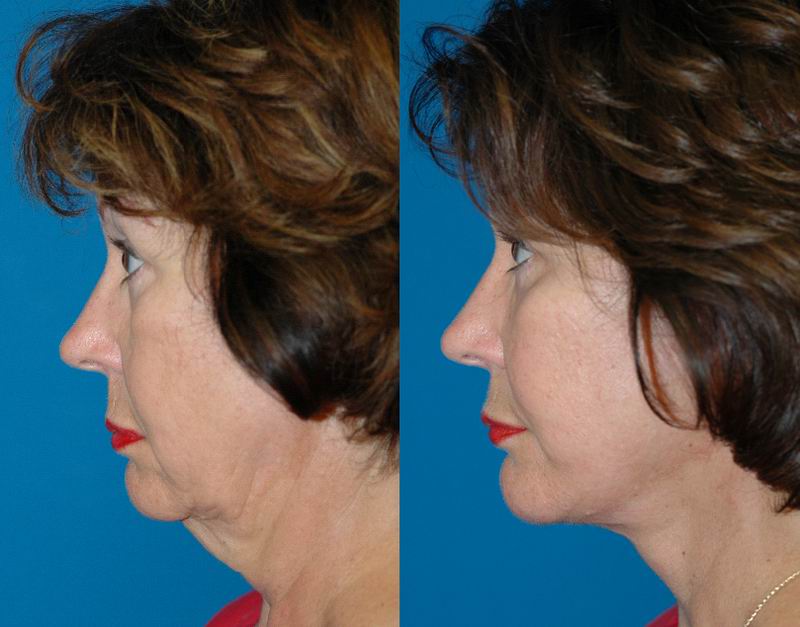
A deep neck lift is a neck contouring procedure performed through a single incision of about 3 to 4 centimetres hidden in the crease under the chin. Working through that one incision, the surgeon removes fat both above and below the platysma muscle, tightens the separated edges of the platysma (platysmaplasty), reduces the digastric muscles where they are full, and trims the submandibular glands where they are enlarged and contributing to a heavy neck.

This is what distinguishes it from liposuction. Liposuction removes only the fat that sits above the muscle. A neck can look full even after all of that fat is gone, because the bulk is beneath the muscle, or is muscle, or is gland. The deep neck lift addresses all four layers, which is why it produces a defined jaw-to-neck angle where liposuction alone would not.

It is also the neck procedure most often chosen by men, because the incision is small and hidden, there is no scarring around the ears, and recovery is comparatively short.

Its limitation is skin. A deep neck lift removes fat and tightens muscle, but it cannot remove excess skin. Patients with significant skin laxity need a lower face and neck lift to address it.

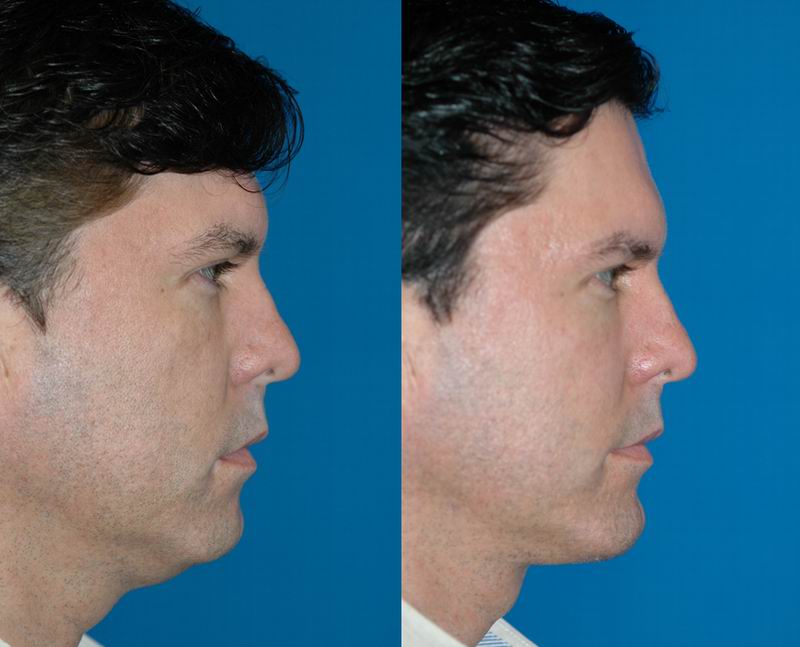
mini_neck_16.jpg

Deep neck lift by Sam Naficy, MD.  * Individual results may vary.

Neck lift options compared

Six techniques are commonly described as a "neck lift." They differ in what they can correct, where the incisions go, and how long the result holds.

Technique What it corrects Incisions Best suited to Return to work Longevity
Neck liposuction Fat above the muscle only 1–2 small, under the chin, sometimes behind each earlobe Age 40 or under, excellent skin tone, no muscle banding, good chin projection Several days Durable if weight is stable, but does not address muscle or skin
Deep neck lift Fat above and below the muscle, platysma banding, digastric muscle fullness, enlarged submandibular glands One, hidden under the chin Neck is the primary concern and skin laxity is limited About one week Deep contouring lasts 10+ years; skin laxity may develop over time
Suspension lift (feather lift, thread lift) Repositions sagging muscle with permanent sutures Under the chin plus behind each ear Patients seeking a limited procedure Under one week Less improvement than a deep neck lift; some patients report a noose-like sensation
Direct neck lift Excess skin in the central neck Vertical, from under the chin down the front of the neck Significant central skin excess in patients who do not want incisions around the ears; often balding men About one week Long lasting
Lower face and neck lift Excess skin, jowls, platysma, and the jawline as one unit Around the ears and into the hairline, plus a small incision under the chin Most patients over 50 with genuine skin excess 10–14 days 10–15 years
Weekend neck lift (Cook procedure) Fat above the muscle; laser tightening of the underside of the skin Under the chin Largely superseded Several days Does not address sub-muscular fat, digastric muscles, or enlarged glands; lasering of skin may be associated with healing problems

As a general rule, the procedures that are shorter and less invasive correct less and hold for less time. The question worth asking any surgeon is not which technique is best, but which of the seven components listed above are driving the appearance of your neck — because that determines the answer.

Who is a good candidate for a deep neck lift?

You are likely a good candidate if you have:

  • Fullness under the chin that has not responded to weight loss
  • A blunted or obtuse angle between the jaw and the neck
  • Visible vertical bands or cords in the neck
  • Reasonable skin quality and elasticity, without substantial excess skin
  • Stable weight and good general health
  • A desire to improve the neck specifically, rather than the whole lower face

Patients seeking a deep neck lift are often somewhat younger than facelift patients, and a significant proportion are men.

Who is not a good candidate for a deep neck lift?

  • You have substantial excess neck skin. This is the most common reason a deep neck lift is not the right operation. Tightening muscle beneath loose skin does not remove the loose skin. A lower face and neck lift is the appropriate procedure.
  • Jowls and the lower face bother you as much as the neck. The jawline and neck are a continuous unit; correcting one and not the other produces an unbalanced result.
  • You use nicotine in any form. Complete cessation is required for at least three weeks before and three weeks after surgery.
  • You have uncontrolled hypertension, poorly controlled diabetes, or a bleeding disorder.
  • Your weight is actively changing. Patients on GLP-1 medications should reach a stable weight before scheduling.

How is a deep neck lift performed?

A deep neck lift takes approximately one hour and is typically performed under general anesthesia.

  1. Incision. A single small incision is placed in the natural crease under the chin.
  2. Superficial fat removal. Fat above the platysma muscle is removed and contoured.
  3. Opening the deep compartment. The platysma is opened in the midline to expose the structures beneath it — the step that gives the procedure its name.
  4. Sub-platysmal fat removal. Fat lying deep to the muscle is removed. This is fat that liposuction cannot reach.
  5. Digastric muscle reduction. Where these muscles are full and contributing to a heavy neck, they are reduced.
  6. Submandibular gland reduction. Where enlarged glands are blunting the neck contour, they are trimmed.
  7. Platysmaplasty. The separated edges of the platysma are tightened and sutured together in the midline, eliminating vertical banding and creating a defined jaw-to-neck angle.
  8. Closure. The incision is closed with fine sutures. No drains are used. A compression garment is applied.

A chin implant can be placed through the same incision when chin projection is deficient, with no additional scars.

What is deep neck lift recovery like?

Most patients return to work about one week after a deep neck lift. A compression garment is worn for the first two days. No drains are used.

Time after surgery What to expect
Days 1–2 A compression garment is worn continuously. Swelling and bruising build and peak around day 3. Discomfort is usually described as tightness rather than pain and is often managed with acetaminophen; a prescription is provided. Rest with the head elevated.
Days 3–7 The garment comes off after day 2. Swelling begins to subside and bruising starts to fade. Sutures are typically removed at the end of this week. Short walks are encouraged.
Week 1–2 Most patients return to work and social activity at about one week. Any residual bruising is usually camouflaged easily.
Weeks 3–4 The jaw-to-neck angle becomes clearly visible. Light to moderate exercise may resume with clearance.
Weeks 6–8 Full strenuous activity is generally cleared. Firmness under the chin and areas of numbness are normal and continue to resolve.
Months 3–12 Residual swelling settles and the scar under the chin matures. The final result is assessed at one year.

Recovery varies with the extent of surgery and whether other procedures were combined. Patients travelling from out of the area are asked to remain locally for 7 to 8 days. See Out of Town Patients.

How long does a deep neck lift last?

The deep contouring achieved by a deep neck lift is long lasting — 10 years or more. Fat that has been removed from beneath the muscle does not return, reduced glands do not re-enlarge, and a repaired platysma stays repaired.

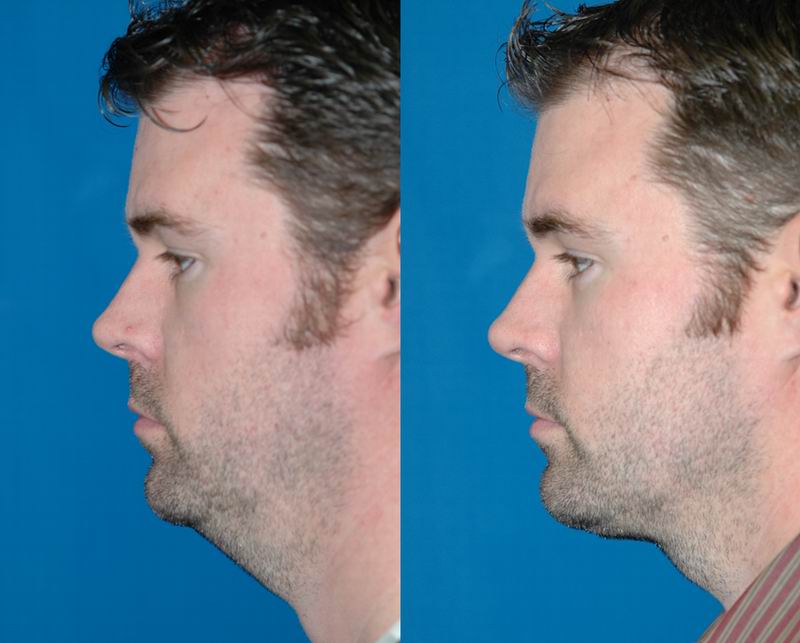
What continues to change is skin. Skin laxity progresses with age regardless of what was done beneath it, so some patients who had a deep neck lift in their forties or fifties later become candidates for a lower face and neck lift to address skin that has loosened since. That is a normal progression rather than a failure of the original procedure.

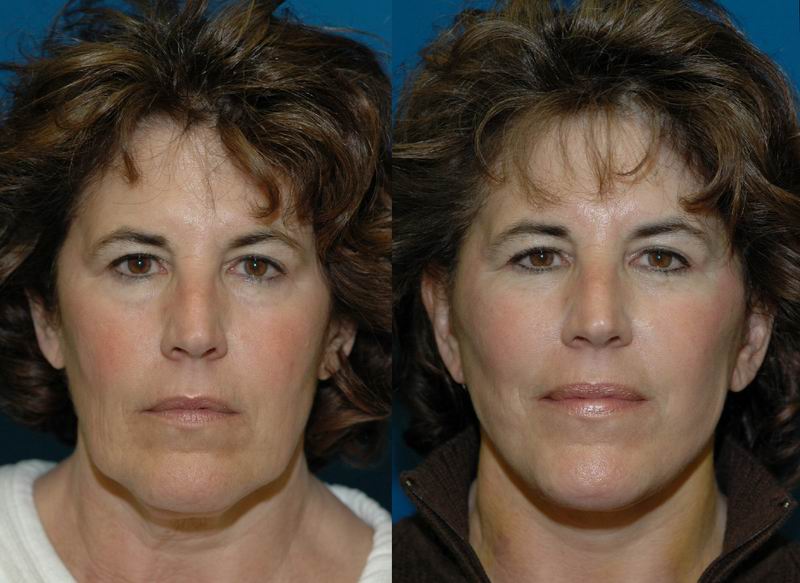
face_neck_fat071.jpg

Lower Face and Neck lift by Sam Naficy, MD.  * Individual results may vary.

Neck liposuction

In a small number of patients, liposuction of the neck alone produces enough improvement to approximate a neck lift. Only a minority of patients are suitable, and used in the wrong patient the results can be disappointing.

The ideal candidate is 40 or younger, has excellent neck skin tone, skin that is neither too thick nor too heavy, excess fat under the chin situated above the muscle, no muscle banding or laxity, and good bone structure in the lower face and chin. It is performed through 1 to 2 small incisions under the chin, sometimes with a small incision behind each earlobe. Laser-assisted variants marketed as Smart Lipo or Cool Lipo add heat in an attempt to tighten the overlying skin. A chin implant may be combined for a better contour.

Full detail: Neck Liposuction.

Suspension neck lift (feather lift, thread lift)

This method uses permanent sutures to suspend the sagging neck muscles in a sling-like manner. It requires an incision under the chin, as with a deep neck lift, plus an incision behind each ear.

The amount of improvement achieved with a suspension lift is less than what is achievable with a deep neck lift, because the underlying fat, muscle fullness, and glands are not addressed — the existing anatomy is repositioned rather than reduced. Occasionally patients develop a noose-like sensation around the neck caused by the suspension sutures. See also Thread Lift.

Direct neck lift

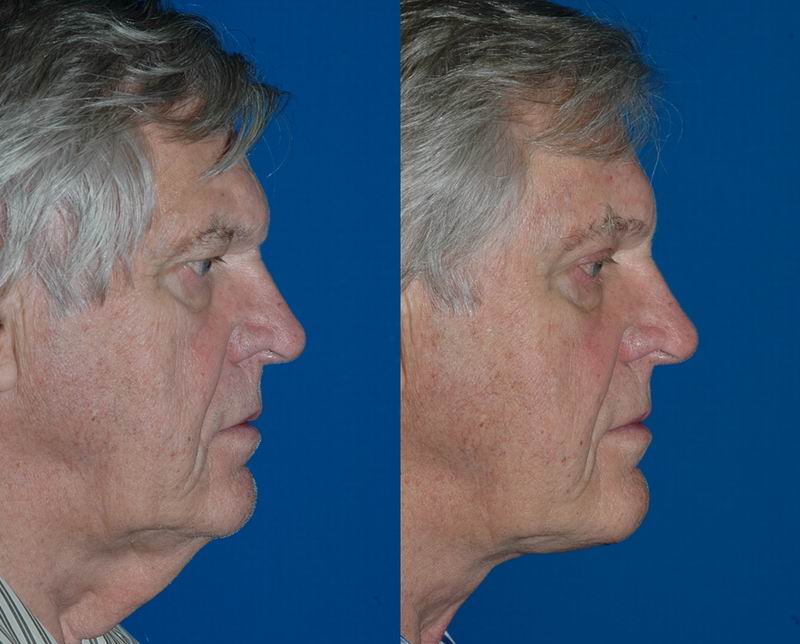
A direct neck lift involves removing excess neck skin directly, with incisions running from under the chin down the front of the neck. The scars typically heal well, but they are not concealed the way incisions around and behind the ears are.

This technique suits patients who have significant excess neck skin, particularly in the central neck, and who do not want incisions placed around the ears. Bald or balding men are often good candidates.

picture22.jpg

Direct neck lift by Sam Naficy, MD.  * Individual results may vary.

Lower face and neck lift

For patients with genuine excess skin, the most effective and longest-lasting approach is a deep plane lower face and neck lift. Because the neck and the lower face are a continuous anatomical unit, lifting them together in continuity produces a more natural result than treating the neck alone. Incisions are placed around the ears and inside the hairline, with a small incision under the chin. Most patients over 50 benefit most from this approach, and it is frequently combined with a brow lift and facial fat grafting.

Full detail, including technique, recovery, risks, and cost: Deep Plane Facelift.

brow_face_neck_fat013.jpg

Lower Face and Neck lift with Brow lift and Fat Grafting by Sam Naficy, MD.  * Individual results may vary.

early_08.jpg

Only 7 days after Lower Face and Neck lif by Sam Naficy, MD.  * Individual results may vary.

Weekend neck lift (Cook procedure)

The weekend neck lift, or Cook procedure, is a modification of the deep neck lift. It falls short of a deep neck lift in two specific ways: it does not address fat beneath the muscle, and it does not address enlarged submandibular glands. It adds laser resurfacing of the underside of the neck skin in an attempt to tighten the skin from within, a technique that has been associated with healing problems. Most surgeons have moved away from it because the result typically falls short of what a deep neck lift achieves.

Neck lift and chin implants

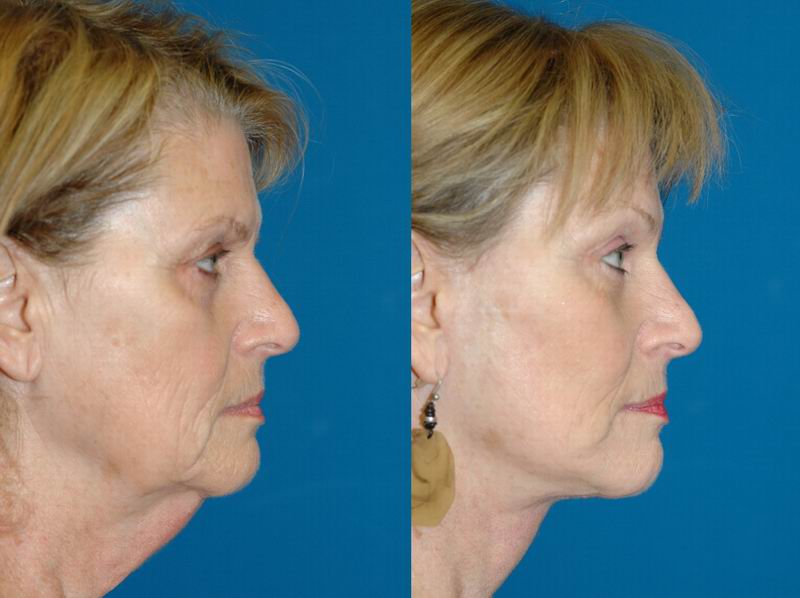
Chin augmentation is often combined with neck lift procedures. A weak or under-projected chin blunts the jaw-to-neck angle no matter how well the neck itself is contoured, so adding projection amplifies the effect of the neck lift considerably. Chin implants are placed through the same small incision under the chin used for the neck lift, so no additional incisions are required.

mini_neck_08.jpg

Deep Neck lift and Chin implant by Sam Naficy, MD.  * Individual results may vary.

Neck skin rejuvenation

Surgery repositions and reduces; it does not change skin quality. Tone and texture of neck skin are often improved with Ultherapy or Thermage, both of which stimulate collagen production. Discoloration from age spots, sun damage, or broken capillaries can be improved with intense pulsed light treatments, also known as Fotofacial.

What type of anesthesia is used?

Deep neck lifts are typically performed under general anesthesia, administered by a dedicated anesthesia provider. Some less extensive neck procedures may be performed with IV sedation; your anesthesia provider will discuss which is appropriate for your health status and the planned procedure. With either, heart rate, blood pressure, breathing, and oxygen levels are monitored continuously.

General anesthesia means you are completely asleep for surgery, with an intravenous line and a breathing tube. IV sedation, also called monitored anesthesia care, delivers sedation and pain medication through an IV while the surgeon places numbing medication in the surgical area.

Surgery is performed in our on-site surgery center, which is Medicare-certified and Washington State–accredited. Our anesthesia team has more than 50 years of combined experience, and all providers also hold appointments at the University of Washington or other regional medical centers.

Anesthesia guidelines [21kb PDF]

What are the risks of a neck lift?

Neck lift surgery is generally safe when performed by a qualified surgeon in an accredited facility, but it is real surgery with real risks.

More common, and usually temporary:

  • Swelling and bruising, resolving over weeks
  • Numbness under the chin and along the neck, typically resolving over weeks to months
  • Firmness or nodularity under the chin as tissues heal
  • Tightness with neck extension in the early weeks

Less common:

  • Hematoma — a collection of blood beneath the skin, the most common complication requiring intervention. Risk is higher in men and in patients with elevated blood pressure, and it usually presents within the first 24 hours.
  • Contour irregularity — unevenness or a residual hollow under the chin, more likely in thin patients or where fat removal is aggressive.
  • Infection — uncommon, treated with antibiotics.
  • Poor scarring at the submental incision, more likely in smokers and in patients with a history of abnormal scarring.
  • Recurrent banding — platysmal bands can recur over time.
  • Persistent fullness where enlarged glands were not addressed or could only be partly reduced.

Rare: injury to the marginal mandibular branch of the facial nerve, which affects the lower lip and is most often temporary; injury to salivary structures; anesthesia complications; deep vein thrombosis; and the need for revision surgery.

Risk is reduced by operating in an accredited facility with dedicated anesthesia, careful patient selection, blood pressure control, complete nicotine cessation, and disclosing all medications and supplements — including over-the-counter blood thinners such as aspirin, fish oil, and vitamin E.

How much does a neck lift cost?

At Naficy Plastic Surgery, a deep neck lift typically ranges from $15,000 to $20,000. A lower face and neck lift, which addresses excess skin and the jawline in addition to the neck, is a larger operation and is priced separately — see Deep Plane Facelift.

Total cost depends on which structures require attention, whether a chin implant or other procedures are combined, operative and anesthesia time, and facility fees. Quoted fees are itemized in writing at consultation, covering surgeon, anesthesia, facility, and follow-up care. Financing is available through PatientFi.

Quotes for "a neck lift" are frequently not comparable, because neck liposuction under local anesthesia and a deep neck lift under general anesthesia are different operations with different results. Ask which structures will actually be addressed — fat above the muscle only, or fat beneath the muscle, digastric muscles, glands, and platysma as well.

Fees & payment policies · Financing

Why choose a facial plastic surgeon for a neck lift?

Most plastic surgeons operate across the full body. A facial plastic surgeon's practice is limited to the face and neck. Dr. Naficy's practice has been devoted exclusively to facial plastic surgery for 25 years. He is certified by the American Board of Facial Plastic and Reconstructive Surgery (ABFPRS), graduated first in his class from the University of Washington School of Medicine, and completed both his residency and fellowship at the University of Michigan. He has been recognized as a top doctor by Seattle Magazine.

The deep neck lift in particular rewards experience. Working beneath the platysma means operating close to the marginal mandibular nerve and the salivary structures, and judging how much digastric muscle and gland to reduce is a matter of practiced judgment rather than protocol. Ask any surgeon how often they perform the procedure and ask to see before-and-after photographs of patients whose starting anatomy resembles yours.

About Dr. Sam Naficy, MD, FACS

Neck lift before and after photos

You may wish to browse the gallery of representative before and after neck lift photographs. All procedures were performed by Dr. Sam Naficy, and some patients had more than one surgical procedure performed. The text accompanying each photograph describes the details of the procedures performed.

neck-lift-gallery.jpg

* Individual results may vary.

Frequently asked questions

What is the difference between a neck lift and a facelift?

A deep neck lift works through a single incision under the chin and corrects fat, muscle, and glands in the neck. It cannot remove excess skin. A lower face and neck lift uses incisions around the ears, removes excess skin, and corrects the jowls and jawline as well as the neck. Which one you need is determined mainly by how much loose skin you have.

Will a neck lift fix a double chin?

Usually yes, but the technique depends on what is causing it. If the fullness is fat above the muscle, liposuction may suffice. If it is fat beneath the muscle, full digastric muscles, or enlarged salivary glands, a deep neck lift is required — liposuction will not reach any of those.

Will a neck lift fix a turkey neck?

Vertical cords are platysmal bands, and they are corrected by tightening the muscle (platysmaplasty) during a deep neck lift. If loose hanging skin accompanies the cords, skin removal through a lower face and neck lift is also needed.

Is a deep neck lift painful?

Most patients describe tightness and pressure rather than sharp pain. Discomfort peaks in the first two to three days and is often managed with acetaminophen; a prescription is provided.

Will the scar under my chin be visible?

The incision sits in the natural crease under the chin, which is not visible in ordinary head-on view. It typically fades to a fine line.

Are drains used?

No. A compression garment is worn for the first two days instead.

Can a neck lift be combined with other procedures?

Yes. A chin implant is the most common addition and goes through the same incision. Neck lifts are also combined with eyelid surgery, brow lift, or fat grafting.

Am I too young for a neck lift?

No. Deep neck lift patients are often in their thirties and forties, particularly those whose neck fullness is anatomic rather than age-related. Candidacy depends on what is causing the appearance, not on age.

How soon can I fly after a neck lift?

Patients travelling from out of the area are typically asked to remain locally for 7 to 8 days for suture removal and the first follow-up visit.

Is a neck lift covered by insurance?

No. Neck lift surgery performed for cosmetic reasons is not covered by insurance.

I am interested. What do I do next?

If you are considering a neck lift, we encourage you to complete the Surgical Consultation Intake Form. Dr. Naficy will evaluate which of the seven components are driving the appearance of your neck, tell you whether you are a suitable candidate, and inform you of the potential risks of the procedure. You will also have a chance to view before and after photo albums of patients who have undergone procedures similar to what you are considering.

Naficy Plastic Surgery & Rejuvenation Center — 1110 112th Ave. NE, Suite 150, Bellevue, WA 98004 · (425) 450-0880. Serving Bellevue, Seattle, Kirkland, Redmond, Medina, Mercer Island, and the greater Puget Sound region.

This page is for general education and does not constitute medical advice. Individual results vary. Written and medically reviewed by Sam Naficy, MD, FACS. Last reviewed August 2026.

AAFPRS Logo
RealSelf Top Doctors Logo
Best of Western Washington Logo
FACS Logo