Eye Bag Surgery
Eye bags are not one problem, and they are not treated with one procedure. They result from three separate age-related changes happening at once: lower eyelid fat bulging forward, the upper cheek losing volume, and the eyelid skin losing collagen and elasticity. Correcting them together — lower blepharoplasty, fat grafting, and laser resurfacing — is what produces a rested result rather than a merely tightened one. Sam Naficy, MD, FACS performs 75 to 90 eye bag procedures each year in Bellevue, Washington. The combination takes about an hour and is performed without any visible external incision.
What causes eye bags?
Lower eyelid bags are one of the most common cosmetic concerns in our practice. They create a tired appearance and drain the vibrance from the eyes, they occur in both men and women, and there are genetic predispositions that make them run in families — which is why some people develop them in their thirties and others not until their sixties.
Understanding why they form is what determines the right treatment, because three separate processes contribute and each needs a different solution.
| What changes | What happens | What it looks like | What corrects it |
|---|---|---|---|
| Lower eyelid fat bulges forward | The fat pads that cushion the eye push forward through a weakening barrier and prolapse into the lower lid | A distinct bulge or pouch sitting directly beneath the lash line | Lower blepharoplasty — the bulging fat is reduced and redistributed |
| Upper cheek volume is lost | Fat in the upper cheek and along the tear trough deflates, creating a hollow immediately below the bulge | A shadow or dark circle beneath the bag; the bag looks larger because the ground beneath it has fallen away | Fat grafting — volume is restored to the cheek and tear trough |
| Skin loses collagen and elasticity | The skin of the lower lid thins and loses recoil. It becomes lax — but it is not excess | Fine crepe-like wrinkling; skin that no longer springs back | Laser resurfacing — collagen is stimulated and the skin tightens |
These compound one another. The bulge and the hollow together create a double hit to the contour of the lower lid: the hollowing makes the prolapsed fat look far more prominent than it would on its own. Treating one without the other leaves the problem half-corrected — which is why reducing the fat alone often produces a result that still looks tired, or worse, hollow.
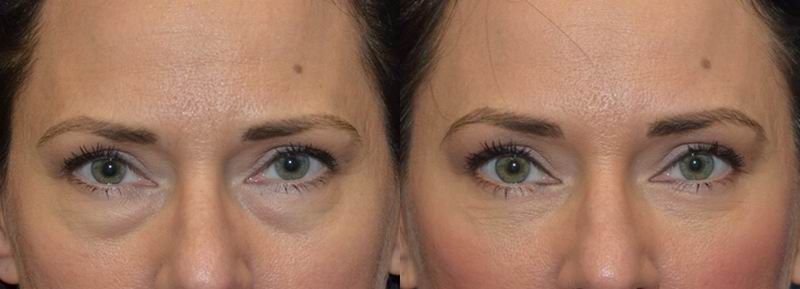
Before and after eye bag removal surgery by Sam Naficy, MD * individual results may vary
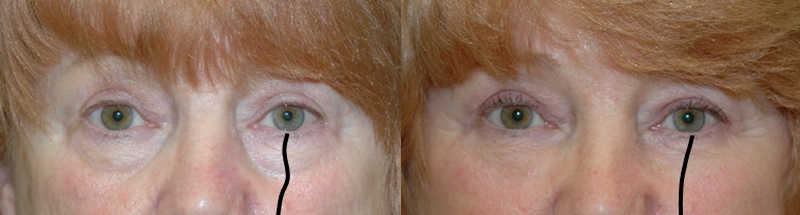
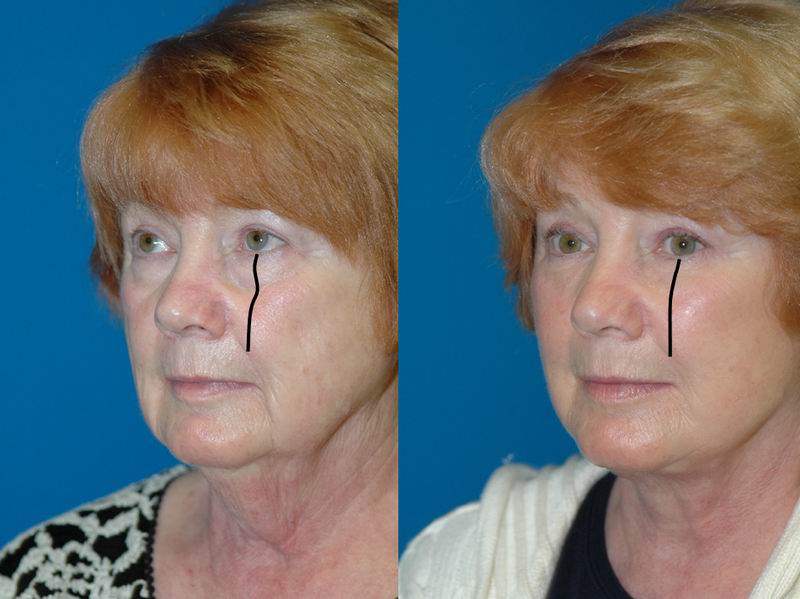
Before Eye Bag Surgery there is a peak-valley-peak contour to the lower eyelid. After surgery the contour is smoother * individual results may vary
Why removing lower eyelid skin may be the wrong answer
This is the most important point on this page, and it is where a great deal of lower eyelid surgery goes wrong.
Because the skin looks loose, the intuitive fix is to cut some out. That may be a mistake, and the reason is that the skin is not always in excess. What has been lost is collagen, and with it elasticity. The skin has the same surface area it always had — it has simply stopped springing back.
Removing lower eyelid skin from a lid that has lost elasticity rather than gained surface area pulls the lower lid downward and away from the eye. That produces ectropion, where the lid margin turns outward, and lid retraction, where the lid sits low and exposes white below the iris. Both are considerably harder to correct than the original bags, and both change the shape of the eye.
The correct approach is to restore what was lost rather than remove what remains. Laser resurfacing stimulates new collagen, which tightens the skin from within and restores elasticity without shortening the lid. This is precisely why laser forms part of the combination rather than being an optional extra.
What is eye bag removal surgery?
Eye bag surgery at our practice combines three procedures in one operation, each addressing one of the three causes above:
- Lower blepharoplasty — reduces and redistributes the bulging lower eyelid fat
- Fat grafting — restores lost volume to the upper cheek and tear trough
- Laser resurfacing — stimulates collagen to tighten and improve the quality of the eyelid skin
Not every patient needs all three in equal measure. A younger patient with strong skin and good cheek volume may need only the blepharoplasty. Most patients over forty benefit from at least two, and the majority of the results shown on this page were achieved with all three.
Is eye bag surgery done without visible incisions?
Yes. The entire combination is performed without any incision on the outside of the eyelid.
- Lower blepharoplasty is performed through the inside of the lower eyelid — the transconjunctival approach. There is no external incision and no visible scar, and because the lid support structures are left undisturbed, the risk of the lid being pulled downward is substantially reduced.
- Fat grafting requires only a tiny entry point for the cannula, which leaves no meaningful mark.
- Laser resurfacing involves no incision at all.
This is a large part of why the procedure is so well tolerated, and why it is the most commonly performed cosmetic operation among our male patients.
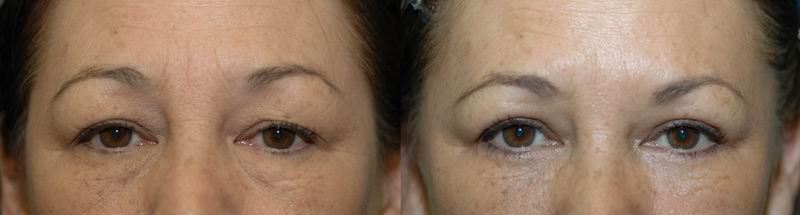
Before and after eye bag removal surgery by Sam Naficy, MD * individual results may vary
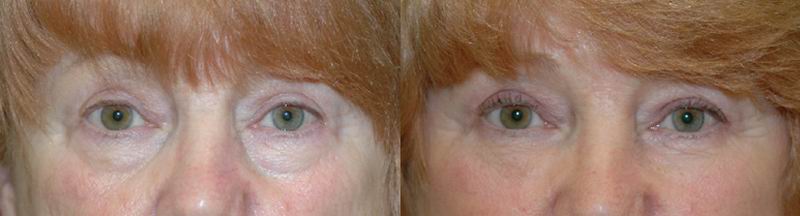
Before and after eye bag removal surgery by Sam Naficy, MD * individual results may vary
Who is a good candidate for eye bag surgery?
- Bulging or puffiness of the lower eyelids that persists regardless of sleep or hydration
- A tired or aged appearance around the eyes that does not reflect how you feel
- Shadowing or dark circles beneath the bags caused by contour rather than pigment
- Crepe-like texture or fine wrinkling of the lower lid skin
- Good general health, no uncontrolled dry eye, and realistic expectations
Who is not a good candidate?
- Your dark circles are pigment rather than shadow. True pigmentation of the lower lid skin does not respond to contour surgery. Pull the skin gently taut — if the darkness persists, it is pigment.
- Your puffiness is fluid rather than fat. Morning puffiness that resolves during the day is fluid, often related to allergy, sleep position, salt, or thyroid function.
- Significant untreated dry eye, which eyelid surgery can worsen.
- Pre-existing lower lid laxity or previous lower lid surgery, which raises the risk of lid position problems and needs careful assessment first.
- You use nicotine in any form. Complete cessation is required for at least three weeks before and after surgery.
- Uncontrolled hypertension, poorly controlled diabetes, or a bleeding disorder.
How is eye bag surgery performed?
The full combination takes approximately one hour and is performed under IV sedation or general anesthesia.
- Transconjunctival access. A small incision is made on the inside of the lower eyelid, leaving the outer surface untouched.
- Fat reduction and redistribution. The prolapsed fat is conservatively reduced, and where the tear trough is hollow, some of it is repositioned into the hollow rather than discarded.
- Fat harvest and grafting. Fat is taken from the patient, processed, and injected into the upper cheek and tear trough to rebuild the platform beneath the eye.
- Laser resurfacing. The lower eyelid skin is treated to stimulate collagen and tighten the skin.
- No external closure is required.
Conservatism in the fat reduction step matters as much as it does in the upper lid. Over-removal produces a hollow, skeletonised lower lid that can look older than the bags did, and is difficult to correct.
What is eye bag surgery recovery like?
Most patients return to work in 5 to 7 days after blepharoplasty and fat grafting. Adding laser resurfacing extends this to 8 to 10 days, because the treated skin needs to heal at the surface.
| Time after surgery | What to expect |
|---|---|
| Days 1–2 | Swelling and bruising around the eyes, peaking early. Cool compresses and head elevation. Discomfort is usually minimal — more like an irritated eye than pain. If laser was performed, the treated skin is pink and requires ointment. |
| Days 3–5 | Swelling settles noticeably. Bruising begins to fade. Laser-treated skin begins to peel. |
| Days 5–7 | Most patients without laser return to work, using concealer or tinted sunscreen over residual bruising. |
| Days 8–10 | Patients who had laser return to work. Skin is pink but make-up can be worn. |
| Weeks 2–4 | Bruising resolved. Light exercise resumes with clearance. Grafted fat still slightly overfilled — this settles. |
| Weeks 6–8 | Full activity cleared. Laser pinkness continues to fade; sun protection is essential. |
| Months 3–12 | Grafted fat settles to its final volume, skin tightening from the laser continues to develop, and the final result is assessed at one year. |
Patients travelling from out of the area should plan accordingly. See Out of Town Patients.
The photographs below were taken at only five and seven days after surgery.
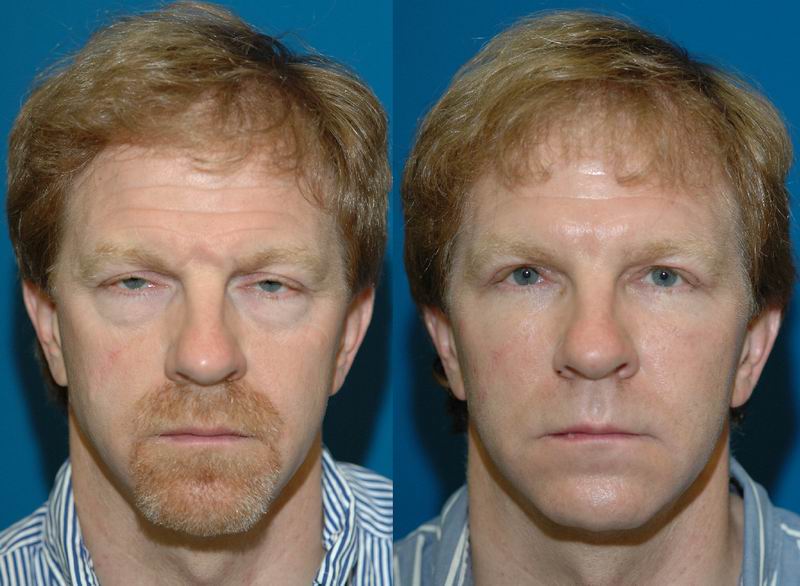
Before and only 7 days after eye bag removal surgery by Sam Naficy, MD * individual results may vary
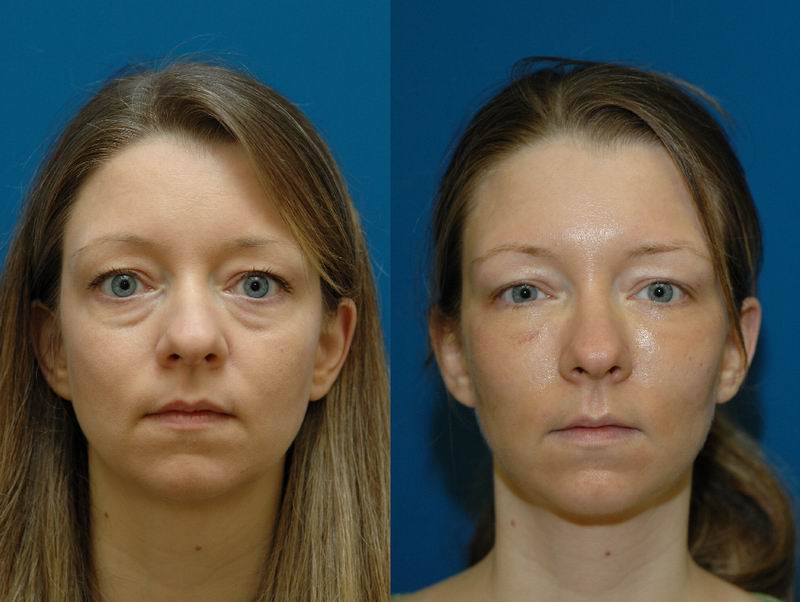
Before and only 5 days after eye bag removal surgery by Sam Naficy, MD * individual results may vary
What other procedures are combined with eye bag surgery?
Eye bag surgery is frequently combined with upper eyelid surgery, a brow lift, or a face and neck lift. Because the eyes are where people look first, correcting the lower lids alongside the rest of the face produces a more coherent result than treating either in isolation.
Published evidence: adding midface volume improves lower eyelid position
Dr. Naficy published a peer-reviewed study on this point. In 70 consecutive patients undergoing midface volume augmentation with their own fat, masked investigators measured lower eyelid position before and after surgery. Restoring volume to the upper cheek produced a mean 0.5 mm improvement in margin–reflex distance 2 and a 0.5 mm reduction in scleral show, and the effect persisted at a mean follow-up of 316 days. Minor complications — chiefly firmness beneath the skin — occurred in 7% and resolved with massage.
This is the measured basis for treating the cheek rather than only the lid: rebuilding the platform beneath the lower eyelid supports it, rather than leaving it unsupported after fat is repositioned.
Naficy S, et al. Effect of midface volume augmentation with autologous fat on lower eyelid position. PubMed, PMID 24814272.
See also: facial fat grafting.
Eye bag surgery in men
Correction of lower eyelid bags is the most commonly performed cosmetic surgery among our male patients, and the reasons are practical. There are no visible incisions or scars, recovery is short, and the outcome does not read as having had work done — it reads as looking less tired.
The aesthetic target differs slightly. The male lower lid should not be over-smoothed or over-filled; a completely flat, sculpted under-eye looks feminised. The aim is to remove the heaviness while leaving the eye recognisably the same.
What are the risks of eye bag surgery?
More common, and usually temporary: swelling and bruising, dryness or grittiness, blurred vision from ointment, temporary asymmetry in swelling, and pinkness of laser-treated skin.
Less common:
- Lower lid malposition — the lid sitting low or pulling away from the eye. This risk is substantially reduced by the transconjunctival approach and by not removing skin, but it is not zero, particularly in patients with pre-existing lid laxity.
- Over-removal of fat, producing a hollow, skeletonised lower lid that can look older than the original bags.
- Under-correction, or asymmetry between the two sides.
- Irregularity or lumpiness of grafted fat, and partial resorption of the graft over time.
- Pigment change after laser, more likely in darker skin types and with sun exposure during healing.
- Dry eye that persists or is unmasked by surgery.
Rare: infection, hematoma, and vision change. Loss of vision after eyelid surgery is extremely rare, and is the reason post-operative bleeding is treated urgently rather than expectantly.
How much does eye bag surgery cost?
At Naficy Plastic Surgery, the full combination — lower blepharoplasty, fat grafting, and laser resurfacing of the lower eyelids — is approximately $17,000. Patients who need only one or two of the three components are quoted accordingly.
Combining the three in one operation costs considerably less than staging them separately, because anesthesia and facility time are shared, and it produces a better result because the components are balanced against one another in a single sitting.
Fees are itemized in writing at consultation, covering surgeon, anesthesia, facility, and follow-up care. Financing is available through PatientFi. Eye bag surgery performed for cosmetic reasons is not covered by insurance.
Fees & payment policies · Financing
Why choose a facial plastic surgeon for eye bag surgery?
The lower eyelid is the least forgiving area in facial surgery. It has almost no margin for over-correction, the tissue is thinner than anywhere else on the face, and the most common complications — a hollow lower lid, a lid pulled away from the eye — are considerably harder to fix than the problem they replaced.
Dr. Naficy performs 75 to 90 eye bag procedures each year. His practice has been devoted exclusively to facial plastic surgery since 2000. He is certified by the American Board of Facial Plastic and Reconstructive Surgery (ABFPRS), graduated first in his class from the University of Washington School of Medicine, and completed both his residency and fellowship at the University of Michigan. Dr. Naficy has been recognized in Seattle Magazine's Top Doctors list.
When choosing a surgeon, ask whether they plan to remove lower eyelid skin, and what their approach is to the hollow beneath the bag. Those two answers tell you whether they are treating one component or all three.
About Dr. Sam Naficy, MD, FACS
What type of anesthesia is used?
Eye bag surgery is performed under IV sedation or general anesthesia, administered by a dedicated anesthesia provider who will discuss which is appropriate for your health status and the planned procedure. Heart rate, blood pressure, breathing, and oxygen levels are monitored continuously.
Surgery is performed in our on-site surgery center, which is Medicare-certified and Washington State–accredited. Our anesthesia team has more than 50 years of combined experience, and all providers also hold appointments at the University of Washington or other regional medical centers.
Anesthesia guidelines [21kb PDF] · Post-operative care instructions [12kb PDF]
Eye bag surgery before and after photos
Representative before and after images of eye bag surgery performed by Dr. Sam Naficy. The caption accompanying each photograph describes the procedures performed.
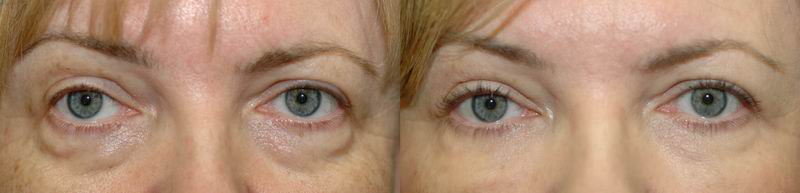
Before and after eye bag removal surgery by Sam Naficy, MD * individual results may vary
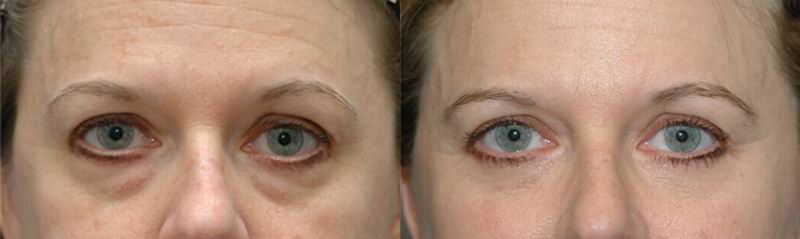
Before and after eye bag removal surgery by Sam Naficy, MD * individual results may vary
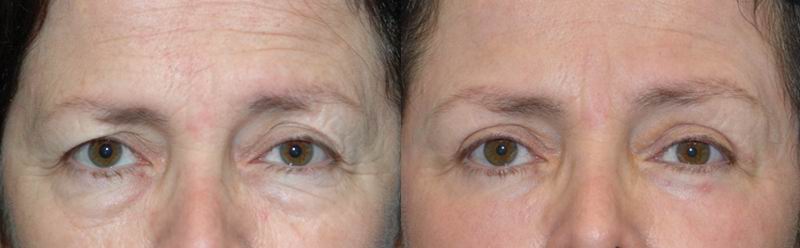
Before and after eye bag removal surgery, upper eyelid lift, and laser resurfacing by Sam Naficy, MD * individual results may vary
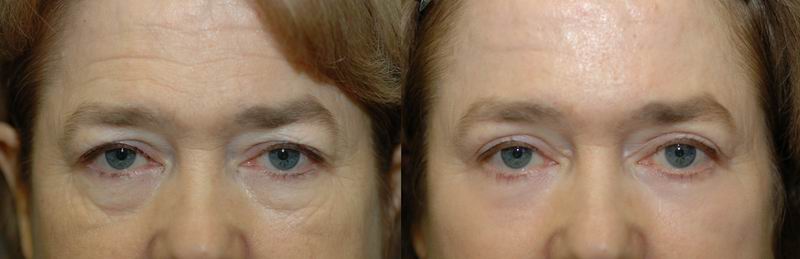
Before and after eye bag surgery, upper eyelid lift, and laser resurfacing by Sam Naficy, MD * individual results may vary
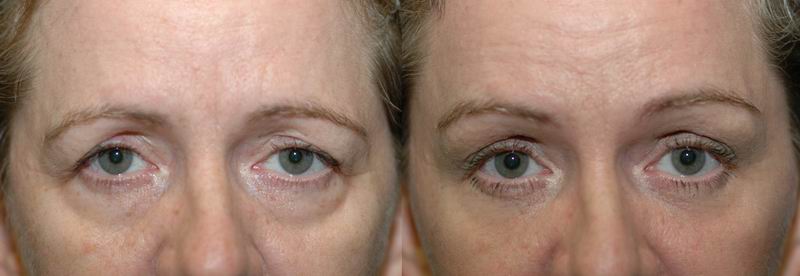
Before and after eye bag removal surgery and brow lift by Sam Naficy, MD * individual results may vary
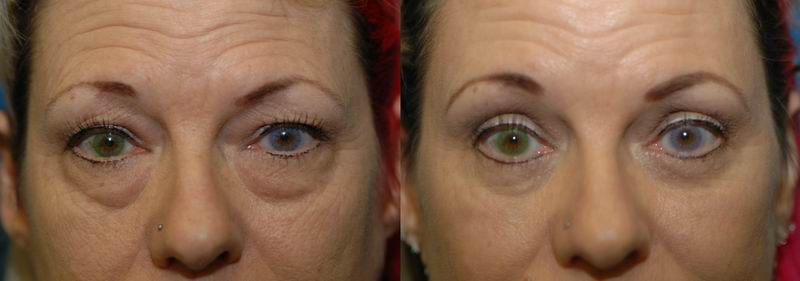
Before and after eye bag removal surgery, upper eyelid surgery, and brow lift by Sam Naficy, MD * individual results may vary
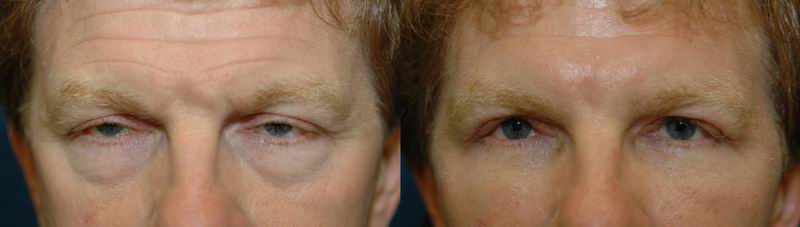
Before and after eye bag removal surgery and ptosis surgery by Sam Naficy, MD * individual results may vary
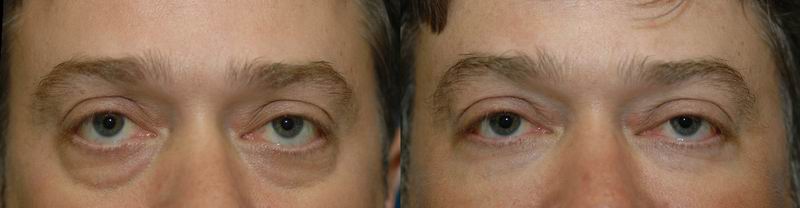
Before and after eye bag removal surgery by Sam Naficy, MD * individual results may vary
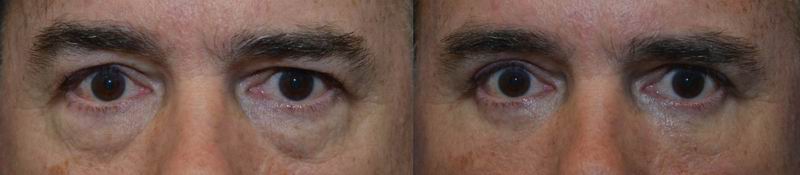
Before and after eye bag removal surgery and upper eyelid surgery by Sam Naficy, MD * individual results may vary
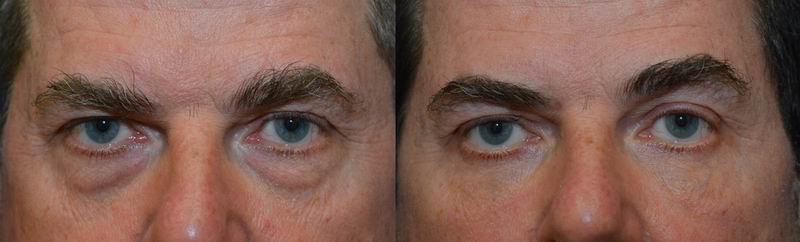
Before and after eye bag removal surgery and upper eyelid surgery by Sam Naficy, MD * individual results may vary
Frequently asked questions
Will my eyelid skin be removed?
No. The looseness of lower eyelid skin comes from loss of collagen and elasticity, not from excess surface area. Cutting skin out risks pulling the lid away from the eye. Laser resurfacing restores the elasticity instead.
Will there be a visible scar?
No. The blepharoplasty is performed through the inside of the lower eyelid, fat grafting needs only a tiny entry point, and laser requires no incision.
Why do I need fat added when I am having fat removed?
They are different fat, in different places. The bulging fat sits in the lower lid; the lost fat sits in the upper cheek just below it. Reducing one and restoring the other is what recreates a smooth contour.
Will fillers do the same thing?
Filler can camouflage the hollow beneath the bag and is a reasonable non-surgical option for a mild case. It cannot reduce bulging fat, and filler placed under thin lower lid skin can look lumpy or bluish and may persist longer than expected.
How long until I look presentable?
Five to seven days without laser resurfacing, eight to ten days with it.
Will the bags come back?
The fat that is removed does not return. Ageing continues, so skin quality and cheek volume change over subsequent years, but the correction is long lasting.
Will this help my dark circles?
If they are shadows cast by the contour, yes. If they are true pigmentation in the skin, no — that needs a different treatment. Pull the skin gently taut; if the darkness remains, it is pigment.
Is it covered by insurance?
No. Unlike upper eyelid surgery, which can rarely qualify where visual obstruction is severe, lower eyelid surgery is cosmetic.
I am interested. What do I do next?
If you are considering eye bag surgery, we encourage you to complete the Surgical Consultation Intake Form. Dr. Naficy will assess which of the three components are contributing in your case — bulging fat, lost cheek volume, skin quality, or some combination — recommend the procedures that fit, and inform you of the potential risks.
Naficy Plastic Surgery & Rejuvenation Center — 1110 112th Ave. NE, Suite 150, Bellevue, WA 98004 · (425) 450-0880. Serving Bellevue, Seattle, Kirkland, Redmond, Medina, Mercer Island, and the greater Puget Sound region.
This page is for general education and does not constitute medical advice. Individual results vary. Written and medically reviewed by Sam Naficy, MD, FACS. Last reviewed August 2026.