Fotofacial
A Fotofacial uses intense pulsed light (IPL) to target red and brown discolouration in the skin — broken capillaries, rosacea redness, sun spots and freckles — without breaking the surface. There is essentially no downtime. Treatment is usually a series of three to six sessions, priced from $400 per session at Naficy Rejuvenation Center in Bellevue, Washington, with package discounts.
What is a Fotofacial?
Fotofacial — also called a photofacial or IPL treatment — uses intense pulsed light rather than a laser. The distinction matters: a laser emits a single wavelength, while IPL emits a broad spectrum of light across many wavelengths at once.
That broad spectrum is filtered so the energy is absorbed preferentially by two targets: haemoglobin in blood vessels, and melanin in pigmented spots. Both absorb the light, heat up, and are destroyed or broken apart, while the surrounding skin — which absorbs far less — is left intact.
Because the surface is never broken, there is no wound to heal, which is why IPL has essentially no downtime.
What does a Fotofacial treat?
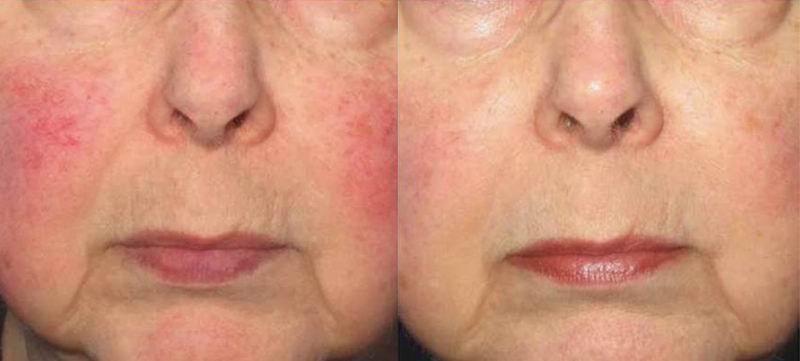
- Rosacea and facial redness — one of the strongest indications
- Broken capillaries and spider veins on the face, particularly around the nose and cheeks
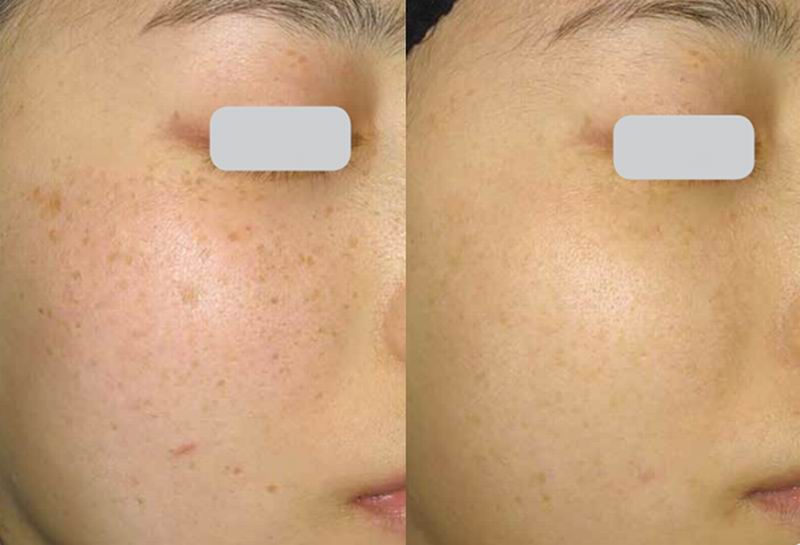
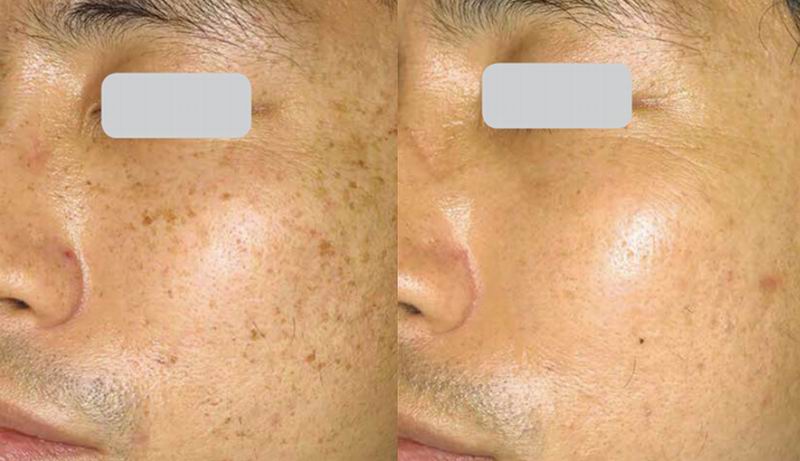
- Sun spots, age spots and freckles
- Uneven pigmentation and general blotchiness
- Poikiloderma of Civatte — the red-brown mottling on the sides of the neck and chest from years of sun exposure
- Overall tone and clarity
What it does not treat: IPL works on colour, not texture or structure. It will not tighten skin, will not fill lines, and does not resurface. For wrinkles and texture see laser resurfacing; for laxity see Ultherapy or Thermage.
Where can IPL be used?
Anywhere sun damage shows — most commonly the face, neck, chest and hands, and also the arms, shoulders and back. The neck and chest in particular respond well, and are areas patients often neglect while treating the face.
How much does a Fotofacial cost?
| Treatment area | Single session | Package of 3 | Package of 6 |
|---|---|---|---|
| Small | $400 | $1,080 | $2,040 |
| Medium | $600 | $1,620 | $3,060 |
| Large | $800 | $2,160 | $4,080 |
| Extra large | $1,000 | $2,700 | $5,100 |
Because IPL is normally a series rather than a single treatment, the package pricing is what most patients actually pay — a package of three works out roughly 10% below single-session pricing, and a package of six roughly 15% below.
Packages expire three years from purchase.
Full non-surgical pricing · Current specials · Financing
How many Fotofacial treatments will I need?
Typically three to six sessions, spaced about three to four weeks apart. Each session removes a proportion of the target pigment or vessels rather than all of it, which is why the series matters — a single treatment produces a partial result that patients often mistake for the treatment not working.
Maintenance sessions once or twice a year are common, particularly for rosacea, where the underlying tendency continues regardless of treatment.
What happens during and after treatment?
A cool gel is applied and you wear protective eyewear. Each pulse feels like a brief snap of a rubber band against the skin — uncomfortable rather than painful, and over quickly. A session takes 20 to 45 minutes depending on the area.
| Time after treatment | What to expect |
|---|---|
| Immediately | Mild redness and warmth, like light sunburn. Treated brown spots often look darker straight away — this is expected and is a sign the pigment absorbed the energy. |
| Days 1–3 | Redness settles. Darkened spots develop a fine, coffee-ground appearance and begin to lift. |
| Days 3–10 | Spots flake away naturally. Do not pick them. Vessels fade over the same period. |
| Weeks 2–4 | Clearer, more even skin. This is when to judge that session and plan the next. |
Makeup can usually be worn the same day or the following day. Most patients treat on a Friday and are unremarkable by Monday.
Sun protection afterward is not optional. Treated skin is temporarily more sun-sensitive, and unprotected exposure will bring the pigment straight back — which is the most common reason patients feel a course of IPL did not last.
Does IPL work on all skin tones?
No, and this needs saying plainly rather than glossed over.
IPL works by targeting pigment. In darker skin, the surrounding melanin also absorbs the light, so the energy cannot distinguish the spot from the skin around it. That risks burns and, more commonly, post-inflammatory hyperpigmentation — the treated area healing darker than before.
- Fitzpatrick I–III (fair to medium): the appropriate candidates, with the best results and the lowest risk.
- Fitzpatrick IV: treated with caution, conservative settings, and only where appropriate.
- Fitzpatrick V–VI: IPL is generally not appropriate. Alternatives are the better recommendation.
A recent tan is a separate issue. Tanned skin behaves like a darker skin type regardless of your baseline, so treatment is postponed until it fades. That includes self-tanner.
Who is a good candidate?
- Sun damage, brown spots, freckles or uneven pigmentation
- Facial redness, rosacea or visible broken capillaries
- Fitzpatrick I to III skin, untanned
- Willingness to complete a series and protect from the sun afterward
- Realistic expectations — IPL improves colour, not texture or laxity
Who is not a good candidate?
- Fitzpatrick V–VI skin, or a recent tan including self-tanner.
- Melasma. This deserves particular caution — melasma is hormonally driven and heat-sensitive, and IPL frequently makes it worse rather than better. It is not the same condition as sun spots even though it looks similar.
- Isotretinoin use within the past six months.
- Photosensitising medications — disclose everything you take.
- Active infection, open wounds or a suspicious lesion in the treatment area. Anything suspicious is assessed before treatment, not lasered over.
- A history of keloid scarring.
- Pregnancy.
- Your concern is wrinkles or laxity rather than colour.
What are the risks?
Expected: redness and warmth for a few hours, temporary darkening of treated spots, and flaking over the following week.
Less common: blistering, crusting, temporary post-inflammatory hyperpigmentation, hypopigmentation (lighter patches), and a visible line where treated skin meets untreated skin.
Rare: burns, scarring, and permanent pigment change.
Most complications relate to treating the wrong skin type, treating tanned skin, or using settings that are too aggressive — which is why the assessment matters more than the device.
Fotofacial vs. other treatments
| Treats | Downtime | Sessions | |
|---|---|---|---|
| Fotofacial (IPL) | Redness, brown spots, vessels — colour | Essentially none | 3–6 |
| Intensive Fotofacial | The same, plus actinic keratoses — precancerous sun lesions | Several days | 1–3 |
| Laser resurfacing | Texture, wrinkles, deeper sun damage | 5–14 days | Often one |
| Thermage / Ultherapy | Laxity and firmness | None | One |
These are complementary rather than competing. A common plan is IPL for colour alongside an energy treatment for firmness.
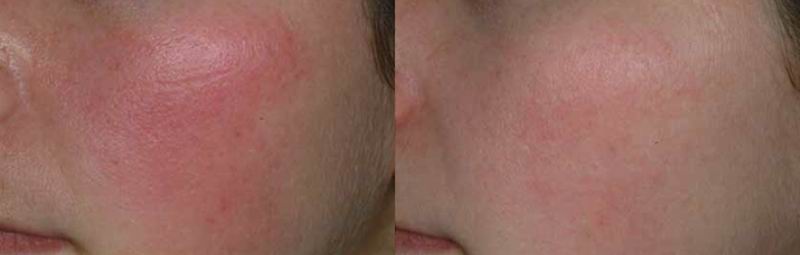
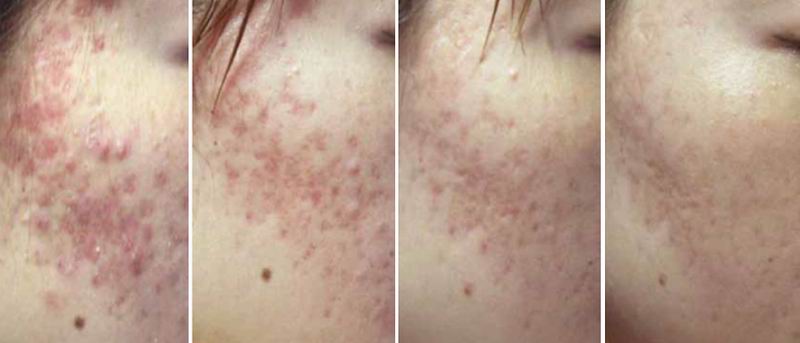
Fotofacial before and after photos
Before and after photographs of Fotofacial IPL treatment at Naficy Rejuvenation Center. Individual results vary.
Frequently asked questions
How much does a Fotofacial cost in Seattle?
At our practice, $400 to $1,000 per session depending on area size, with packages of three and six at roughly 10% and 15% discounts.
How many IPL sessions do I need?
Typically three to six, spaced three to four weeks apart, plus maintenance once or twice a year.
Does IPL hurt?
Each pulse feels like a brief rubber-band snap. Uncomfortable rather than painful, and no anaesthetic is normally needed.
Is there downtime after a Fotofacial?
Essentially none. Mild redness for a few hours, and treated brown spots darken and flake over about a week.
Why did my spots get darker after IPL?
That is the expected response, not a complication. The pigment absorbed the light and is being cleared. The spots darken, take on a fine coffee-ground appearance, and flake away over three to ten days.
Does IPL help rosacea?
Yes — it is one of the strongest indications, targeting the visible redness and vessels. It does not cure the underlying tendency, so maintenance is usually needed.
Can IPL treat melasma?
Generally no, and it can make melasma worse. Melasma is hormonally driven and heat-sensitive, and needs a different approach despite looking similar to sun damage.
Can I have IPL on darker skin?
Fitzpatrick I to III are the appropriate candidates. Type IV with caution. Types V and VI are generally not suitable, because IPL cannot distinguish the target pigment from surrounding melanin.
Can I have IPL if I am tanned?
No. Treatment is postponed until the tan fades, including self-tanner.
What is the difference between IPL and laser?
A laser emits one wavelength; IPL emits a filtered broad spectrum. That makes IPL well suited to treating red and brown targets across a wide area, and lasers better suited to precise, single-target work.
Next steps
A consultation confirms that what you are seeing is sun damage or vascular redness rather than melasma or a lesion needing assessment, and establishes whether your skin type makes IPL appropriate. Because we are a surgical practice, anything suspicious gets evaluated rather than treated.
Naficy Rejuvenation Center is located in Bellevue, Washington, and serves patients from Seattle, the Eastside, and throughout the Pacific Northwest.
Schedule an appointment · Ask a question · Intensive Fotofacial
Medically reviewed by Sam Naficy, MD, FACS, board-certified by the American Board of Facial Plastic and Reconstructive Surgery.